 Rome, Italy · ·

A study by the Intergovernmental Panel on Climate Change (IPCC) (UN, 2020) suggests that global warming may reach 1.5°C between 2030 and 2052. “Climate-related risks to livelihoods, human security and economic growth will increase with this level of heating and could be catastrophic with an increase of 2°C”. By 2050, more than 216 million people will be displaced within their own countries’ borders because of climate change (UNDP, 2023). But climate change has impacts on security too. As the data show (PBF, 2020), 70% of the countries most vulnerable to climate change are also the most fragile in terms of security, and according to Krampe (2019), “[e]ight of the ten countries hosting the most multilateral peace operations personnel in 2018 are located in areas highly exposed to climate change”.
The resulting increase in water and food shortages, land erosion, drought, and scarcity of natural and energy resources may deepen existing social grievances and economic instability (UNDP, n.d.).
In this context, peacebuilding, to be effective, must take into consideration the environmental impacts on security, such as deepening inequality in access to natural and energy resources, displacement caused by natural disasters, scarcity, food insecurity, and poor water and food management (DPPA, UNDP & UNEP, 2020). Peacebuilding is a complex of processes that aim not only to end violence, but also to transform armed conflicts into non-violent ones, by addressing structural issues so as to build what is defined as positive peace (just, sustainable and inclusive) and to rebuild broken social relations. It can therefore be employed as a means to address the impacts of climate change and to introduce socially embedded praxis that enables more climate-friendly policies and approaches in governance. To be effective, peacebuilding must be culturally sensitive and participatory (UNDP, 2025). As practice shows, local practices of natural resource management and dispute settlement produce the best results, especially when tensions arise from mass displacement, discriminatory policies on access to resources, and unequal distribution (UNDP, 2025).
The impacts of climate change on security
Climate change doesn’t cause conflicts directly, but it’s a threat multiplier that deepens insecurity and fuels violence. It does so when its effects are mismanaged, when communities are not resilient, when decision-makers don’t address them effectively and when the state is unable to meet the resulting needs and challenges (UN, n.d.). The impacts of climate change create a need for further state intervention and assistance that the state cannot meet because of weak governance, thus compounding existing social and economic grievances that can worsen or fuel conflicts (DPPA, UNDP & UNEP, 2020). Women, youth and children are the most affected, because the impacts of climate change deepen inequality and exclusion from decision-making processes (UNDP, 2025).
These effects are more acute in communities that rely on agricultural and resource-based livelihoods, and in those already affected by armed conflict (Krampe, 2019). The latter are less resilient, and thus more vulnerable to the effects of climate change. This can create vicious circles, in which conflicts deepen and natural disasters multiply, because the community has reached its threshold and its coping capacity has been compromised.
The deterioration of livelihoods based on natural resources causes economic instability, poverty and food insecurity. Young men and women, already excluded from decision-making processes and the job market, may decide to join armed groups to support themselves and their families. In Somalia, for example, the terrorist group Al-Shabaab takes advantage of growing competition over resources, and of the fragility arising from refugee status, to recruit young men (Krampe, 2019).
At the same time, women’s safety is threatened by the insecurity that the actions of those same armed groups create, since it exposes women to conflict-related gender-based violence. As a result, women restrict their movements and prefer to stay out of the public sphere for fear of retaliation or violence. Women’s absence from the job market means a loss of earnings every year.
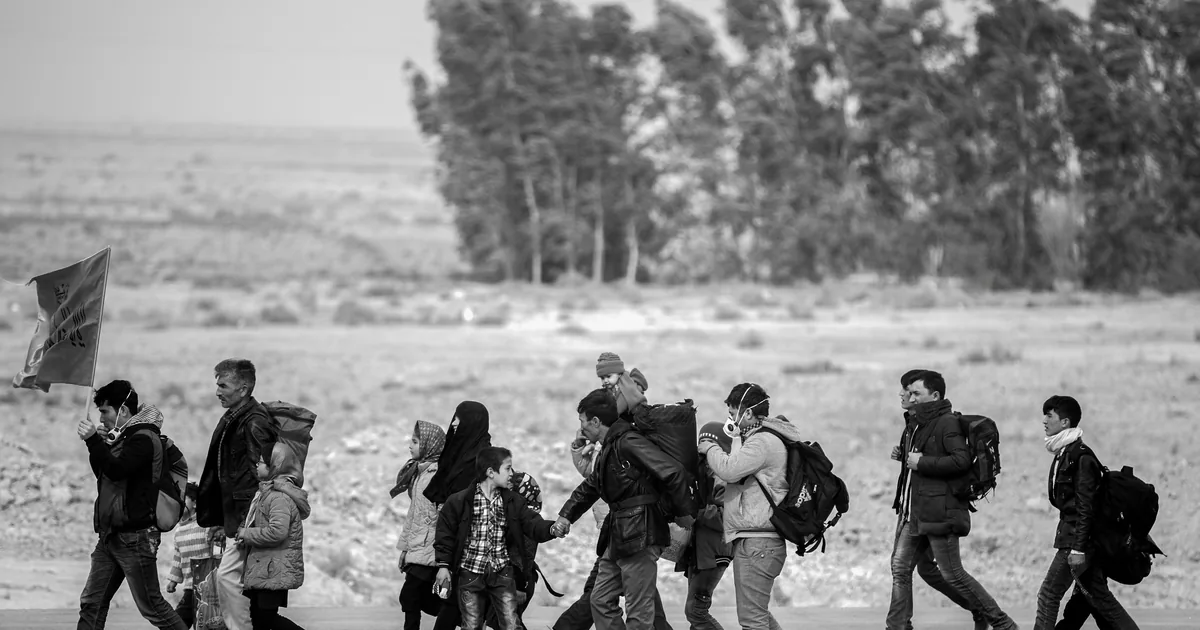
Natural disasters and scarcity of resources are also push factors for displacement and migration. A massive movement of refugees can raise social tensions within local communities, partly because of the increased demand for resources and competition for job opportunities (UNDP, 2023).
Rising temperatures may cause water stress, and a single body of water is often contested by different states. Mismanagement and scarcity can create international tension and possible conflicts. This, together with displacement related to climate change, creates security risks beyond borders (Tarif et al., 2023).
The impacts of climate change also affect peacebuilding efforts. In Somalia, for example, the influx of refugees changed the demographic composition of the country and thus weakened the power-sharing agreement facilitated by the UN Assistance Mission in Somalia (UNSOM), which was based on ethnic lines (Krampe, 2019).
Climate security and environmental peacebuilding
In conflict-affected contexts where climate change is a risk to security, peacebuilding processes must be climate-informed. This means that any intervention must consider how to allocate resources and land equally, how to manage these resources sustainably, and how to strengthen institutions to promote climate-friendly governance. This approach has a double effect: it prevents conflicts over access to resources and enables reconciliation between the parties. Interventions should also adopt a transboundary approach, because the effects of climate change that deepen conflicts affect several countries and territories at once. In addition, growing refugee flows create further social tensions in host countries, which can result in retaliation against the refugees themselves or against neighbouring countries (DPPA, UNDP & UNEP, 2020).
Peace efforts must put people at the centre: climate risks and armed conflicts both threaten human security and weaken the social fabric, so local populations must be involved in peace processes. Communities, moreover, have traditional practices of dispute settlement and natural resource management that can be employed for peacebuilding. In Timor-Leste, for example, the UNDP incorporates traditional practices such as Tara Bandu, agreements on the use of resources, and Nahe Biti Boot, negotiation processes, to build a more just and lasting peace and to ensure climate security (UN, 2021). Peace efforts must also be gender-sensitive and take into consideration power struggles and discrimination between classes and between ethnic and religious groups. Women and youth are the most affected by both climate change and armed conflict, because they are excluded from decision-making processes and the job market. Interventions that can enhance the agency of women and youth, and their participation in the public sphere, natural resource management and environmental governance, must therefore be implemented (UN, 2021).
Climate change solutions can also be used as peacebuilding strategies, in an approach called climate security. One example is the construction of renewable energy plants, which can reduce emissions and land erosion and create new jobs, resulting in less catastrophic environmental damage and keeping young people from joining armed groups (UNDP, 2023).
A further example: engaging the conflicting parties in partnership projects that reduce climate risks and promote sustainable development can rebuild the inter-community relationships destroyed by armed conflict. In South Darfur, the UNDP launched an initiative to increase groundnut production that brought together farmers from two ethnic communities in conflict, the Rizeigat and the Ma’aliah (UNDP, 2023). The project strengthened groundnut production, which climate change had eroded, improved livelihoods and became an opportunity for reconciliation between the two communities (UNDP, 2023). As the chairman of the Groundnut Farmers Association in Dar El Salam put it, “[t]his shared labour has further healed our wounds and created a bond between our groups. People no longer remember the enmity of the old days” (UNDP, 2023).
More climate-sensitive financing would also support and enhance peace efforts (UNDP, 2023).
Conclusion
Climate change is posing new threats to development and security, and its consequences have the potential to deepen social conflicts, which risk becoming armed. Peacebuilding must therefore deal with new challenges, interrelated with the effects of climate change, in order to prevent violent conflict and to build peaceful and just societies.
To be effective, then, peacebuilding must be climate-sensitive: it needs to be able to implement policies that strengthen environmental governance, establish equal and inclusive natural resource management and ensure balanced access to land and water. It is recommended that these processes adopt a participatory lens and follow a bottom-up approach. Local and traditional practices of mediation, reconciliation and resource management can be powerful tools. The analysis of social relationships and power struggles should adopt a gender-sensitive and intersectional lens.
Professors Patricia Mische and Ian Harris (2012) proposed a definition of environmental peacebuilding that would include the concept of eco-justice, which “[…] envision[s] and seek[s] to achieve a sustainable community where all humans have equal access to the world’s resources within sustainable limits, and the needs of the natural world are considered in making decisions about human activities”. This means that peacebuilding must also be decolonial: it must consider the disparities between the Global North and the Global South, where the former exploits the latter’s natural resources with devastating effects on the climate, the environment and peace. The long-running armed conflicts in the Democratic Republic of the Congo are worsened by competition for access to mineral resources such as coltan (used in electric car batteries), in which external companies have taken part and from which they have profited by supporting mercenaries. Mining also poses a huge threat to climate security in the country (UN, n.d.).
Sources
- DPPA, UNDP & UNEP (2020). Climate Security Mechanism. Briefing Note. United Nations.
- PBF (2020, July). Climate Security and Peacebuilding. United Nations Peacebuilding.
- Krampe, F. (2019, June). Climate Change, Peacebuilding and Sustaining Peace. SIPRI Policy Brief.
- Mische, P. & Harris, I. (2012). Chapter 7. Environmental Peacemaking, Peacekeeping, and Peacebuilding: Integrating Education for Ecological Balance and a Sustainable Peace. In A. Wenden (Ed.), Educating for a Culture of Social and Ecological Peace (pp. 169–182). SUNY Press.
- Tarif, K., et al. (2023, December). Insights on Climate, Peace and Security. Climate, Peace and Security Research Paper, NUPI & SIPRI.
- UNDP (2023, November 22). Building a Safer World Through Climate Security. How Climate Action can Spur Lasting Change. United Nations Development Programme.
- UNDP (n.d.). Climate, Peace and Security. United Nations Development Programme.
- UNDP (2025, September 11). Four Ways to Build Peace and Climate Resilience Together. UNDP Climate Promise.
- UN (n.d.). Climate, Peace and Security: What We Need to Know. United Nations Peace and Security.
- UN (2021). Five Ways the Climate Crisis Impacts Human Security. United Nations Climate Action.